

Why I Don’t Recommend Post-Workout Static Stretching
Post-workout static stretching used to be the thing – a necessity, even. Everyone did it, myself included. I was taught its supposed importance during my All Arms Physical Training Instructor course back in 2013 and again during my Level 3 PT course in 2014. I suspect it’s still being promoted on many fitness qualifications today.
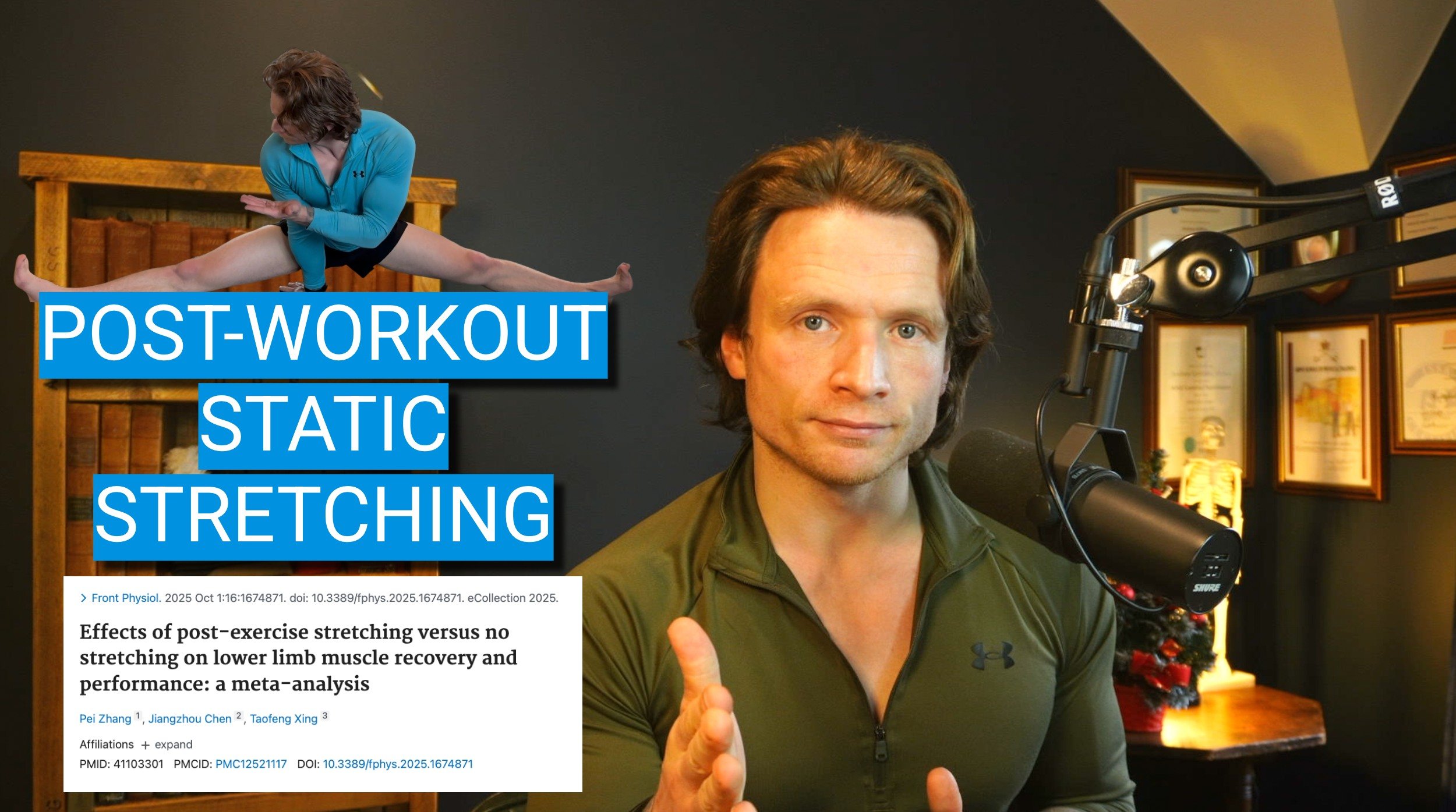
However, when we review the actual research, the claimed benefits don’t hold up. A recent meta-analysis looking at lower-limb muscles and post-exercise recovery gives us a clearer picture.
Prefer to watch than read? Then please check out the video below:
What the Latest Research Says About Static Stretching
A recent meta-analysis examined fifteen studies investigating post-exercise static stretching and its impact on recovery. Across these studies, static stretching showed statistically non-significant effects on:
Muscle soreness
Muscle strength
Performance
Flexibility
Pain threshold
Pretty underwhelming if you’re an advocate for post-workout stretching!
Most people include static stretching to help reduce soreness or improve flexibility, but this analysis – along with many previous studies – suggests there is minimal real-world benefit.
Why Most People Don’t Need Post-Workout Static Stretching
The truth is, many people who consider adding static stretching to their training are already doing something far more effective: proper resistance training.
Warm-up sets and full-range-of-motion (ROM) exercises essentially act as weighted dynamic stretching. Good resistance training is good flexibility training.
For most individuals, incorporating exercises like deep squats, split squats, Romanian deadlifts, and other movements that place the muscle under a loaded stretch will significantly improve mobility and range of motion over time.
I still recommend some dynamic stretching before training to loosen tight muscles, boost mobility, increase blood flow, and prepare the joints for the session ahead. This offers far more benefit for performance and safety than static stretching after a workout.
When Static Stretching Is Worth Doing
So who should still be doing static stretching, and why?
If you’re aiming to improve flexibility beyond what intelligent resistance training can offer, then spending an extra 10 minutes after your session on static stretching can be justified.
This is something I personally do because I’m training to achieve the splits – partly for landing head kicks in kickboxing, and partly because childhood Jean-Claude Van Damme films convinced me it would be cool.
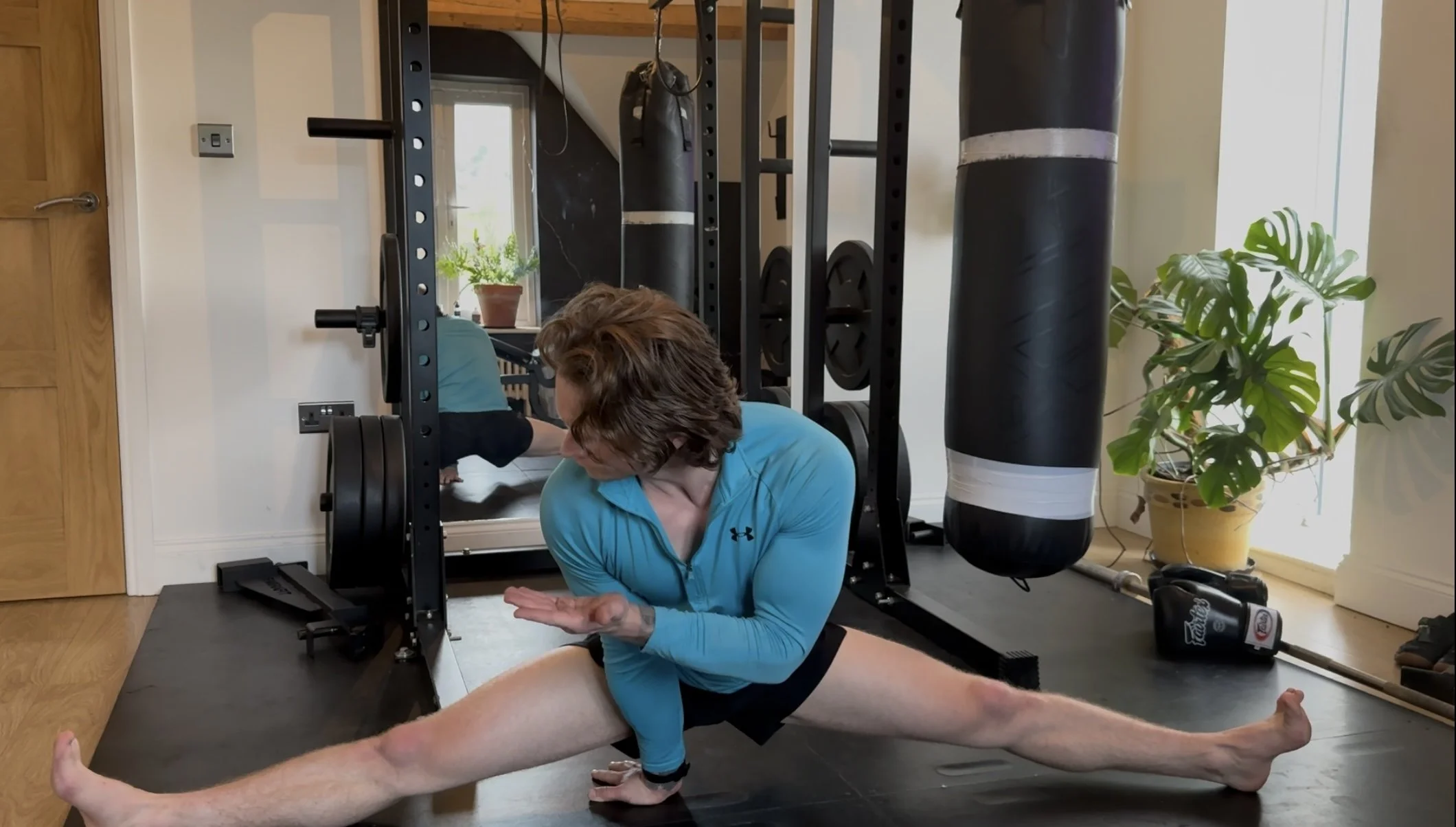
For goals like this, static stretching has a place.
But for the majority of people, resistance training alone will dramatically improve flexibility without needing additional static stretching.
If you’re new to training, just be sensible: don’t push a stretch too far, don’t chase pain, and make sure you warm up appropriately.
The Bottom Line
Static stretching after training is perfectly fine if you enjoy it or if you have a specific flexibility goal – that’s exactly why I’m doing it right now. But for most people, it’s not necessary, and current scientific evidence supports this.
If your goal is better mobility, less soreness, improved movement quality or performance, the solution is simple: well-designed, full-ROM resistance training.
Happy training!