
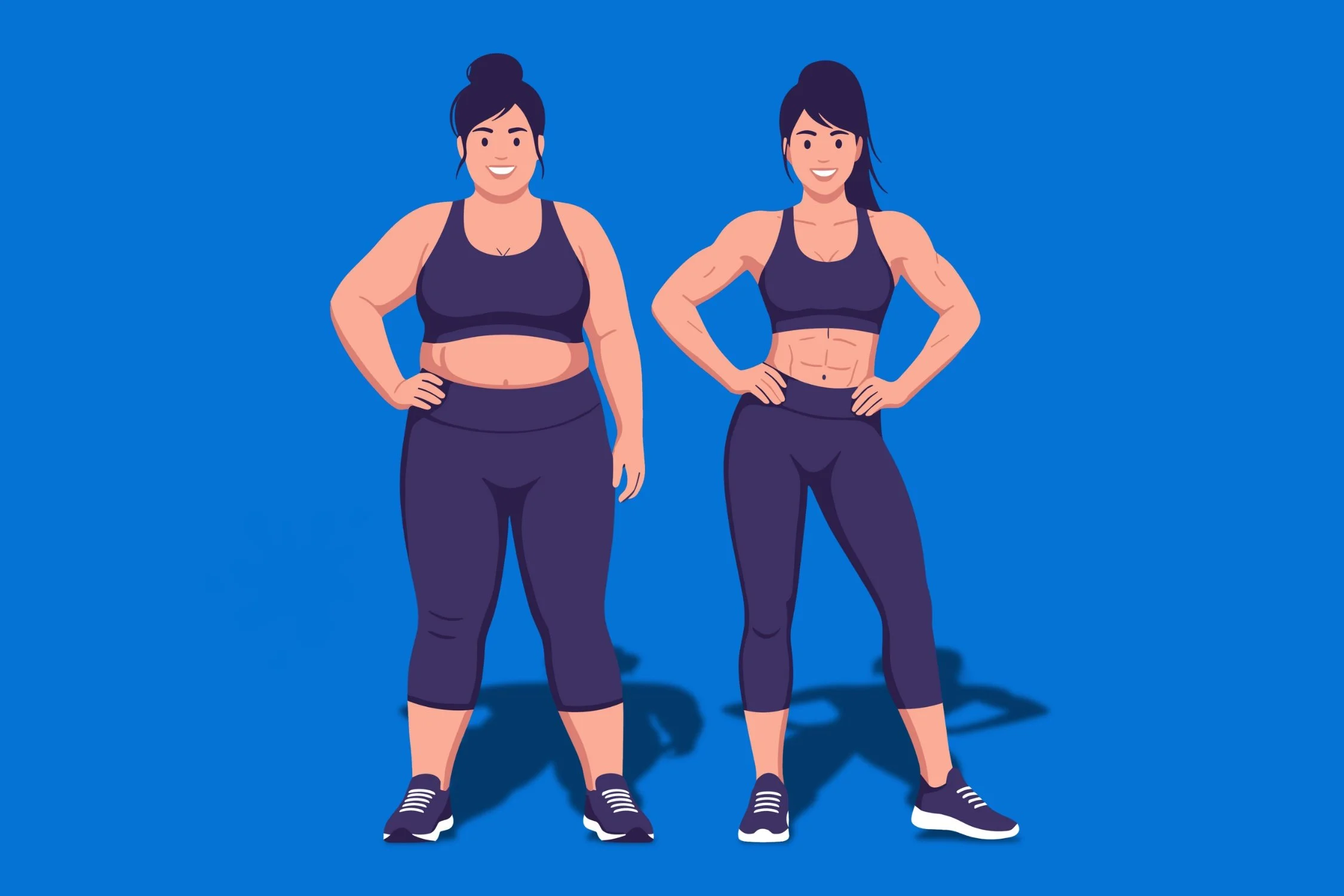
Fat Loss Vs Weight Loss: What Do These Terms Actually Mean?
When the motivation to get in shape strikes, many of us will automatically say, “I want to lose some weight.” However, “weight loss” is a rather vague term that can actually be unhelpful when it comes to making positive, sustainable changes to your body.
Here’s a look at the nuances between the terms “weight loss” and “fat loss”, and why understanding this distinction matters far more than most people realise.
What’s the difference between fat loss and weight loss?
Weight loss simply means a reduction in total body weight. That number on the scale can go down for many reasons: loss of body fat, water, glycogen, muscle tissue, or even food volume in the gut.
Fat loss, on the other hand, refers specifically to reducing stored body fat while preserving lean tissue such as muscle. From a health, performance, and aesthetic perspective, fat loss is almost always the real goal, even if people use the terms interchangeably.
Why does the scale drop so quickly at the start of a diet?
Early weight loss is often driven by water loss rather than fat loss. When calories and carbohydrates drop, glycogen stores in the muscles and liver decrease. Glycogen binds water, so losing it results in rapid changes on the scale.
This is why people often see big losses in the first one to two weeks, followed by slower progress. The body has simply moved past the initial water drop and into true fat loss, which is naturally slower.
Can you lose weight without losing fat?
Yes, and this is where problems arise. Aggressive dieting, excessive cardio, poor protein intake, and inadequate resistance training can all lead to muscle loss.
The scale may continue to drop, but body composition worsens: less muscle, relatively higher body fat percentage, slower metabolism, and poorer shape. This is why some people reach their goal weight yet feel softer, weaker, or less confident than expected.
Why is fat loss a better goal than weight loss?
Fat loss prioritises what actually changes how you look, feel, and function.
When fat loss is the focus:
Muscle mass is preserved or even built
Metabolic rate is better maintained
Strength, energy, and performance improve
The results are more sustainable in the long term
Weight loss alone doesn’t guarantee any of these outcomes.
Why does focusing on fat loss change how you train?
Fat loss-focused training prioritises resistance training to protect lean mass. Strength training sends a clear signal to the body that muscle is needed, even during a calorie deficit. Cardio can support fat loss, but it should complement training, not replace it.
How does nutrition differ when fat loss is the goal?
Fat loss diets mean being precise about what you eat, not depriving yourself.
Key principles include:
Adequate protein intake to preserve muscle
A moderate calorie deficit, not an extreme one
Sufficient carbohydrates to support training
Consistency over restriction
Crash diets may drive weight loss, but they rarely produce quality fat loss. Fat loss is slower, but it's a smarter approach than just aiming to shed a bit of timber. It leads to better health, better body composition, and results that actually last.
As an expert online personal trainer, I appreciate this can sound a bit scientific and daunting, so please feel free to reach out to me with any questions!