Strength & Muscle Building

The Dumbbell Lateral Raise

The Dumbbell Lateral Raise

Stand with the dumbbells by your side or to your front with your shoulders pinned back. Without any swinging, lift the dumbbells to your side with a slight bend at the elbow, continue to go up until your arms are parallel to the floor and then pause for a second. Lower the dumbbells back down slowly whilst maintaining constant tension.

RDL (Romanian Deadlift)

The RDL (Romanian Deadlift) is a compound hinge movement focusing on the hamstrings (back of legs), specifically the eccentric (way down) part of the exercise where we are trying to achieve maximum stretch through the hamstrings. 

The starting position is holding the bar at hip level with a pronated grip. Your shoulders should be pinned back, your back neutral and your knees slightly bent. 

Once you have a strong starting position, you’ll be ready to start the movement. Lower the bar by pushing your bottom back as far as you can. Keep the bar as close to your body as possible (it should slide down your legs) and keep your shoulders pinned back. 

You’ll know when you’re doing it correctly as you’ll feel an incredible stretch in the hamstrings. Once you’ve reached full stretch (generally just below the knee), you can then start to bring the weight back up by driving your hips forward and locking out at the hip joint to achieve full squeeze of the glutes. Make sure your back stays straight through the full range of motion.

Key Coaching Points:
- Shoulder blades pinned back
- Slight bend in the knees
- Push your bottom out/push to the sky
- Keep the bar close to your body

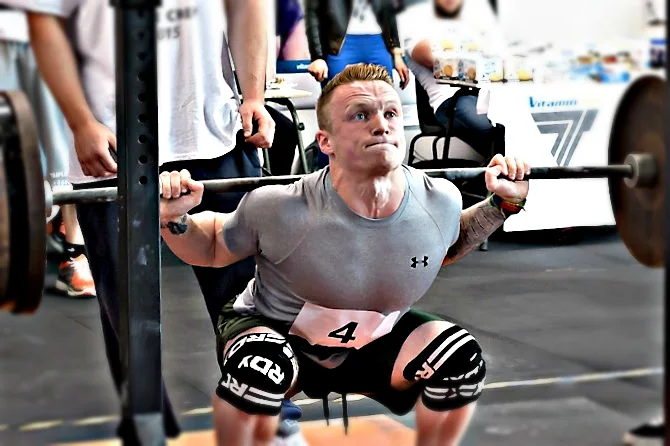
How to Squat - The Perfect Squat In 14 Easy Steps

How To Squat

Step 1 - Stop avoiding the squat with your weak ass excuses….”I have bad knees’…”It hurts by shoulders”. 

Step 2 - Grab the barbell shoulder width apart

Step 3 - Bring yourself under the bar whilst keeping your hands in the same position

Step 4 - Squeeze your shoulders blades together

Step 5 - Bring the bar to an almost comfortable position just above your shoulder blades and sitting across your posterior delts

Step 6- Brace your core and take a deep breath

Step 7 - Unrack the bar by squeezing your gluts, this will allow your hips to slightly drive forward and unrack the bar.

Step 8 - Walk the bar out with a minimal amount of steps

Step 9 - Make sure your feet are shoulder width apart and slightly facing outwards.

Step 10 - Exhale, then take a deep breath whilst re-bracing your glutes and core.

Step 11 - Start the squat by pushing your hips back and letting your knees track towards your toes, I suggest you slightly push your knees out to increase glute activation.

Step 12 - Once you have hit depth (thighs parallel to the ground), drive up by contracting your legs, driving your hips forward and knees slightly out

Step 13 - Take a second to appreciate how biomechanically awesome what you just did was.

Step 14 - Repeat 

Do you need to mix up your workouts?

Do you need to mix up your workouts?

The short answer to this is “NO you do not”, but as always I’m going to go into more detail so you fully understand why. 

First of all, let’s look at the pros of mixing up your workouts:

  • Keeps things exciting

  • Can optimise muscular damage (mechanisms of muscle development).

Now let’s look at the cons:

  • It’s almost impossible to track progressive overload (progression with the weights/strength)

  • You generally end up doing the same shit each week, even if the days are different, the weeks and months end up being about the same.

Let’s take this to the extreme, on the one hand, we have boring Bob who does the exact same session each time he trains, it’s a full-body split with a 500m row at the end. On the other hand, we have Jimmy Spandex who does a different session every time he trains. 

Now as boring as Bob’s session is, he’s more likely to improve as he can accurately track his progress. As much as Jimmy is a fun guy, it will be much more challenging for him to accurately track his progress and he would likely be using the same weights each week.

Now, results are not everything, nor am I suggesting you do the same boring shit each time you train. So here is the solution - Design a plan that is based around your goals, have a different session for each day of the week, but continue that plan for 4-6 weeks, this allows you to accurately track progression and allows you to compete with yourself. Essentially, if you know how you performed last Monday, how much you squat, how fast you ran, then you’re likely going to want to beat those times. Once you have done 4-6 weeks, change up the plan, but maybe increase volume, this is the basic fundamentals of programming.

In summary, doing a random session each time you train means you’re not training, you’re working out, working out gets you results, but training gets you to your desired goal.