
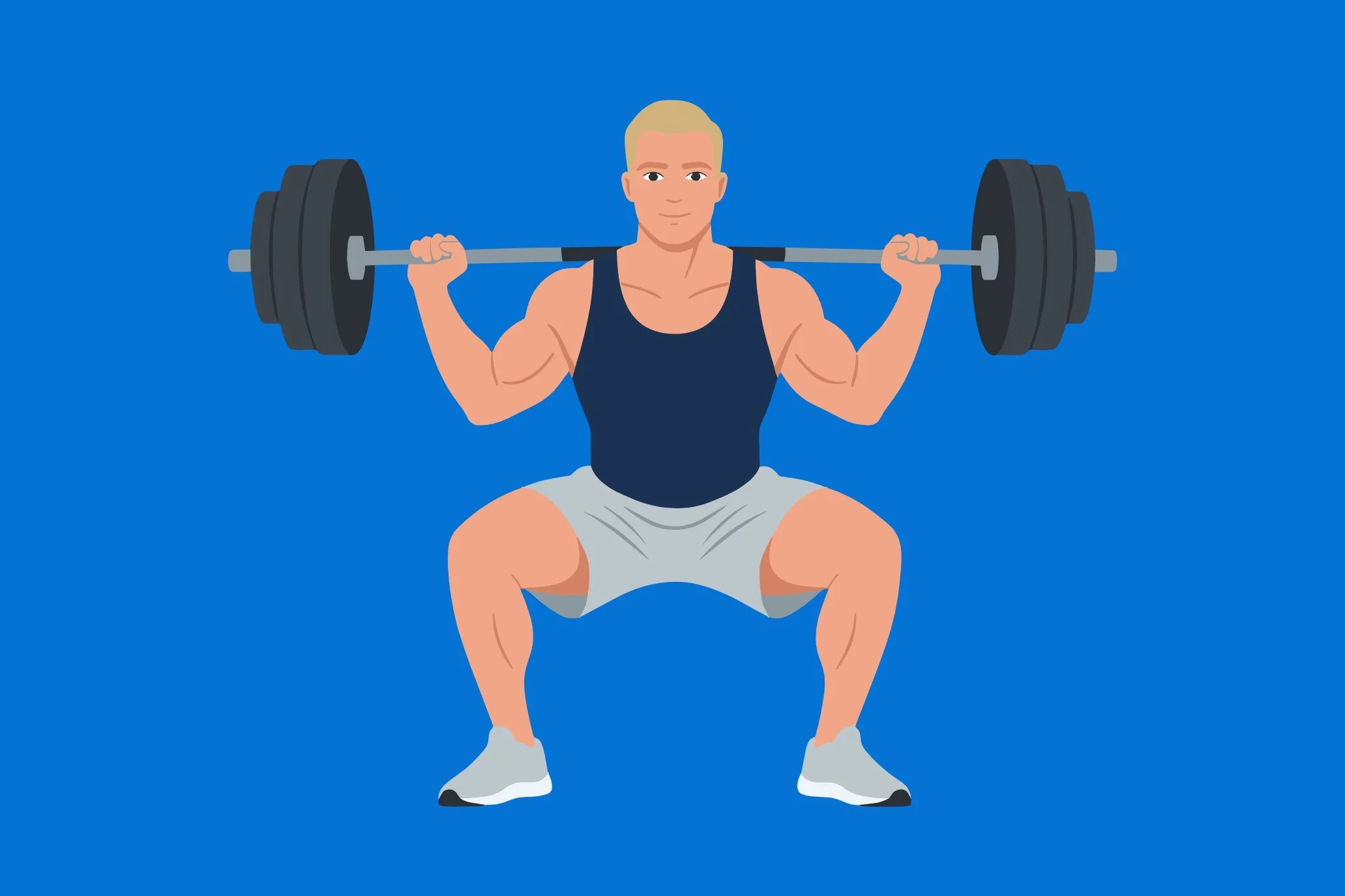
Strength Training: Get Stronger, Leaner, & More Confident!
If there’s one thing you can do to improve your health, body composition, confidence and invest in your future, it’s strength training.
I’m not just talking about lifting weights here – I’m talking about the methodical pursuit of building strength. Many people lift weights, but not everyone strength trains. Many people simply go through the motions of moving weights from A to B. They have their set, go-to weights for each exercise: “let’s grab those 30s for the chest press” or “those 10s will do for the lateral raises”, and miss out on upping the weights, progressively overloading and getting stronger. Which means they’re missing out on all the fun. Increasing strength is not just about building muscle – it’s about building confidence and, honestly, just feeling awesome. The feeling you get when you can confidently rep out a weight that made you quiver just months prior is unmatched. So, when you think about strength training, don’t just think you need to go through the motions and lift weight – think, I’m training to build strength, and my goal is to see those numbers go up!
Building Strength Builds Confidence
When you feel strong, you feel confident and capable, and you don’t need to hit huge numbers in order to get this feeling, as it’s all relative. You don’t need to be Hafþór Björnsson pulling 510kg off the ground to feel strong. You can be 60 years old, having recently taken up strength training for longevity reasons, and after just a few months you’ve gone from squatting the 20kg barbell to adding two 10kg plates each side and squatting 40kg. That’s a 100% increase in strength, and you feel it. You feel good, stronger and more capable. You walk taller and have more of a spring in your step. There are many people who are under the illusion that people only strength train to look good, and don’t get me wrong, many people do, myself included, but that’s often something that just gets people started. What keeps people going, turning up to the gym after a long day at work, is that when they hit those weights and press more over their head than they ever thought possible, they feel great – in fact, they feel powerful!
Getting Strong & Feeling Powerful
Feeling powerful is a bit of a cringe-inducing and taboo thing to say. For many reasons, it’s seen as egotistical, and if you’re powerful, then maybe that suggests someone else is less powerful, right? But the thing is, strength training is not about being stronger than others, and you don’t need to be stronger than others to feel strong – you just need to be stronger than your past self, and that’s what it’s all about!
Progressive Overload
To ensure you’re getting the maximum benefits from strength training, to ensure you’re feeling awesome, building confidence, and getting the real muscle-building and strength benefits, you need to be progressively overloading. Progressive overload requires a gradual increase in volume, intensity, frequency or time. Volume is total work, like total sets – intensity is how hard you push yourself and how heavy you go – frequency is how often you train – and time is, well, time – how long a set or session takes. To simplify things, keep a log of the weights you use, especially for exercises that really test your strength, such as squats, deadlifts, bench press, military press, heavy rows, and pull-ups or pull-downs. I recommend playing around with some lower-rep sets to really test your strength. You don’t need to test your one-rep max – unless you have specific powerlifting or strongman goals, I’d advise against it, but you do want to play around with 5-rep sets to drive neuromuscular adaptation and make serious strength gains. You can, of course, play around with 3-rep and 4-rep sets, but going below that and truly testing your 1-rep or 2-rep max carries an injury risk that's unnecessary for most people.
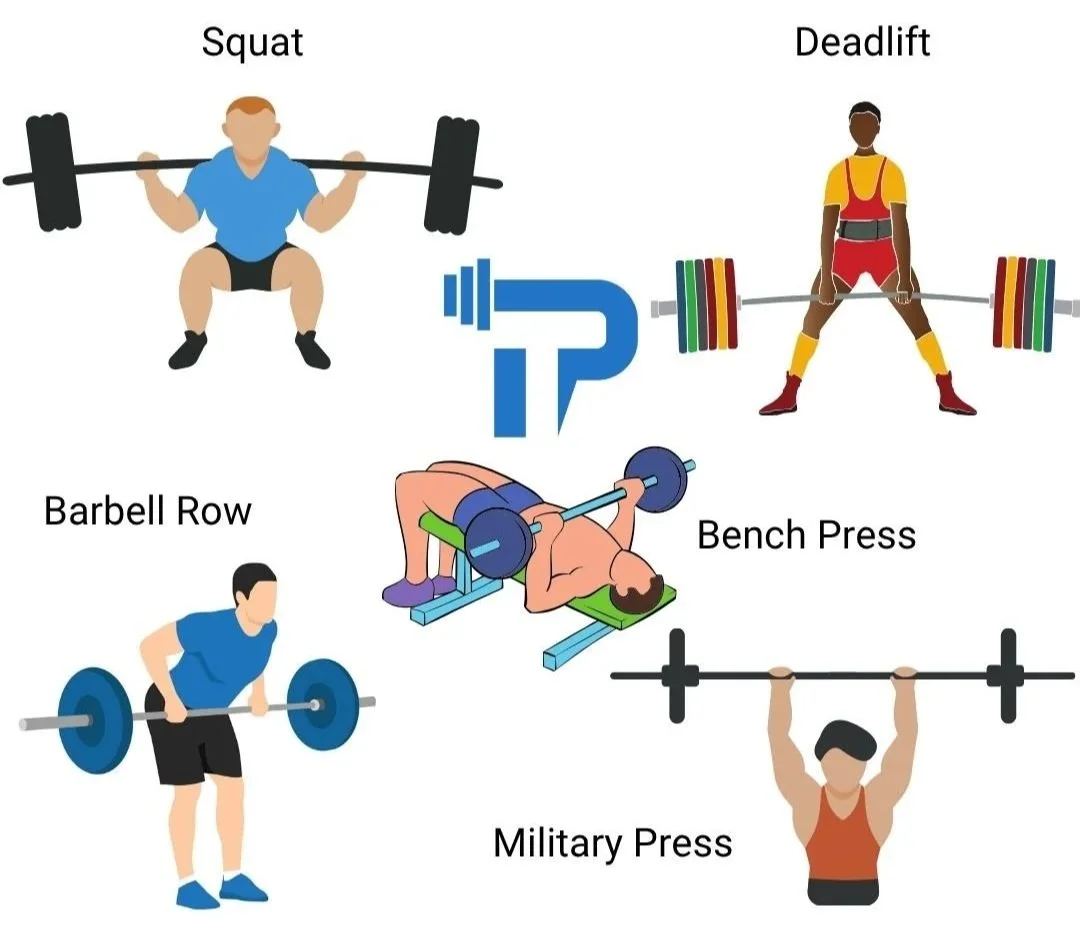
What are the Best Rep Ranges for Strength & Muscle Gain
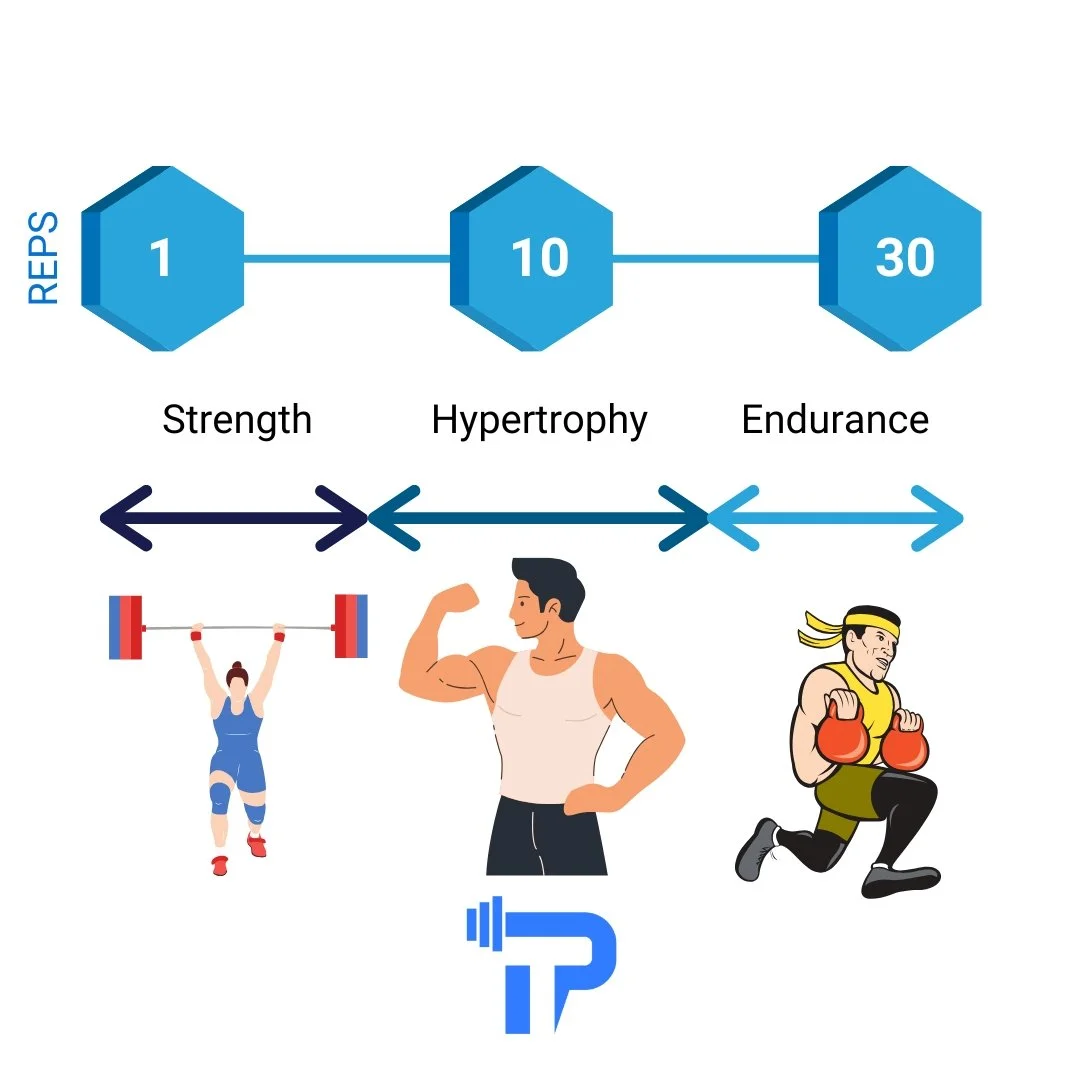
For most people, you’ll be working in rep ranges between 5 and 15 reps. Below 5 reps has inherent risks, and north of 15 reps just sucks. You can build muscle with rep ranges up to 30, but as you do need to take muscles close to failure to maximise muscle gain, this is very difficult, and I’d say horrific, to gauge when doing north of 15 reps. For example, let’s say I’m doing my 5 rep max on squats – the first few reps are hard, and once I get to about rep 3, it gets harder, but that’s okay, because at that point, I think to myself, “I only have two more reps to go”. Plus, my legs aren't exactly on fire or cramping up – it’s just heavy, dude. Conversely, consider we're now doing our 30-rep max. In this horrific example, it starts feeling heavy at rep 15, and the burn is already unbearable. At rep 20, we’re evaluating our life choices. At rep 25, each rep following this feels like we’ve got nothing left, but as it’s our 30-rep max, we’re able to push that little bit more. We’re now on rep 28 and even our CV system is about to give up. Rep 29 is excruciating, and rep 30 is diabolical. Fun, right? Now let’s rest for 2 minutes in the fetal position and go again. No thanks! This is why it makes more sense to work in a rep range between 5 and 15. Lower reps are obviously more advantageous for strength and neuromuscular adaptation, but higher reps aid muscle growth and muscular endurance and let you improve technique more safely.
Undulated Periodisation
Personally, I like to do a bit of undulating periodisation to get the best of both worlds: muscle, strength and muscular endurance gains. Undulating periodisation is a fancy way of saying one week we’ll focus on strength, with fewer reps and higher resistance, and the other week we’ll focus more on hypertrophy, with a slightly lower weight allowing for more reps. These consistent changes in rep ranges prevent your body from getting too accustomed to a certain range and allow for more consistent progress, helping prevent those infamous plateaus. This is important not only for muscle gain, but as mentioned, what really makes you feel awesome is not the actual numbers you're pushing or pulling, but the fact that those numbers are increasing, so we want to do everything possible to ensure consistent progressive overload.
Correct Lifting Form
To keep progressing and stay injury-free, you must maintain good technique and solid form. On my YouTube and website, I have countless video demos with expert guidance to help you stay injury-free and maintain proper technique.
Summary
Strength training is one of the best things you can do for your body and mind, so do it now, and do it properly. You’ll never regret getting stronger!