
Transitioning off GLP-1 medication: Ozempic, Wegovy, or Mounjaro
Stopping or tapering off GLP-1 medications (like Ozempic, Wegovy, or Mounjaro) can be scary. For those of you who have decided to cease the medication, I’m here to help with the transition.
Prefer to watch than read? Then please check out the video below:
Speak to your doctor
First, let me preface this by saying I’m not a doctor. I’m not here to advise on dosage or encourage people to stop a medication that works! I’m a Nutritionist and Online PT, so my skill set and area of expertise are helping people with the other stuff outside medical interventions.
Any conversations about stopping the medication or tapering should be done under the guidance of the prescribing medical professional.
How to manage hunger
Now that we got that out of the way, let’s start by managing expectations. Will hunger come back? Yes, and the magnitude of this depends on how much weight you’ve lost and the habits you now have in place.
There is a hypothesis in the weight loss space known as set point theory, which suggests the body has a genetically and biologically predetermined weight range it defends, resisting fat loss by increasing hunger and reducing metabolism. Essentially, if you’ve lost a lot of weight, there will be physiological drivers pushing you back to that weight.
To help you conceptualise the impact, let’s say your new maintenance calories are 2000. This number of calories allows you to effectively maintain your weight. With ad libitum, intuitive eating, and the new drivers to eat more, you’ll likely eat above this. If you end up eating 2200, which is just a 10% surplus, this will result in steady regain over time. This increased appetite is a natural thing following a weight loss phase, and not reserved solely for those who have opted to take this medication.
It goes without saying, but if you eat comparable to how you did before you started the medication, you will regain the weight. If you eat to fully extinguish hunger, you will very likely regain the weight.
Instead, we want to eat in a way that allows us to maintain our new body fat levels and manage the new hunger. This is done by cultivating habits that attenuate hunger and increase fullness.
Let’s keep this simple with three steps:
Eat a good source of protein with most meals
Eat fruit or veg with most meals
Hydrate
If we reference the satiety index, which measures how filling some of the most common foods are, we can see that foods higher in protein, fibre, and water are considerably more filling.
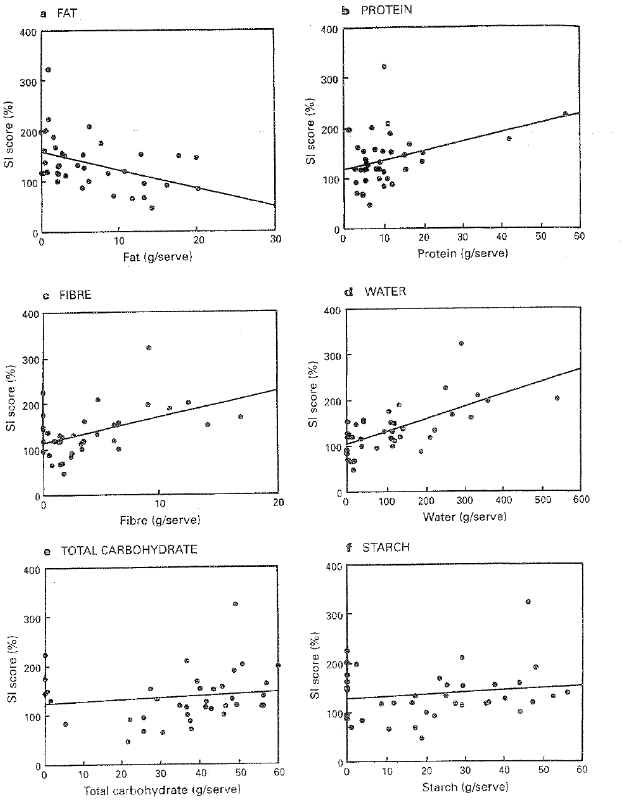
In fact, when you review the satiety index, it can be quite eye-opening as to how different isoenergetic, iso-caloric, equivalent calorie foods can be. For example, there is a seven-fold difference between 240 calories worth of croissant and 240 calories worth of boiled potatoes. Seven times more satiating!! What!!!
When you come off your GLP-1 medication, it’s important you eat in a way that’s filling and prioritise protein, fibre, and water. If your meals contain a good protein source with fruit or veg – fruit and veg being low in calories, high in volume/water and rich in fibre, this will leave you much more satisfied than if you opted for the croissant.
Only eat till you’re 70 to 80% full
Additionally, you want to listen to your fullness cues and only eat till you’re 70-80% full – you don’t want to finish a meal feeling stuffed. When managing your calories and not eating in a surplus, you may need to be content with the feeling of slight hunger. The sooner you accept this, the easier the process will be, and the more successful of a transition you’ll have.
Accept some weight regain
Despite the fact that we’ll be aiming to maintain body fat percentage, we’ll also need to accept that the scales will go up a bit, particularly in the first few weeks. When you’re eating more, there is more food passing through the digestive system, which does weigh a fair bit, plus you’ll be filling back up depleted glycogen stores, which is the storage form of carbohydrates in the muscles. Every gram of glycogen holds onto 3-4 grams of water, so this could account for a kilo or two of weight gain, just from this. This depends on what your diet was like while on the medication, and how much muscle you have. More muscle means more available glycogen storage. It’s a good thing, but it can be scary to see a jump on the scales.
Expect to see the scales go up in the first few weeks, and then, assuming you have implemented the aforementioned dietary habits, you’ll hopefully be in a position to successfully maintain your weight going forward.
Lift weights and get the steps in
For increased efficacy, look to incorporate resistance training and a sensible step target, between 7,000 and 10,000 steps.
This transition can be difficult, so it can be invaluable to be under the guidance of an experienced coach, such as myself, who has helped others with this transition.
Remember, I’m not here to say if you should come off it, or how you should taper the medication, that’s not my scope of practice or area of expertise. But if you’ve decided to come off it, or been advised to, and need help with maintaining your weight without medication, or even wish to stay on it, and work with a coach to get the combined benefits and take a more sustainable approach, I’m your man!
Transitioning off GLP-1 Medication Summary list:
Speak to your doctor
Have a good source of protein with most meals
Eat plenty of fibre – eat fruit and veg
Only eat till you’re 70-80% full
Be content with slight hunger
Get the fluids in and eat foods rich in water, such as fruit and veg
Accept a bit of initial weight gain